

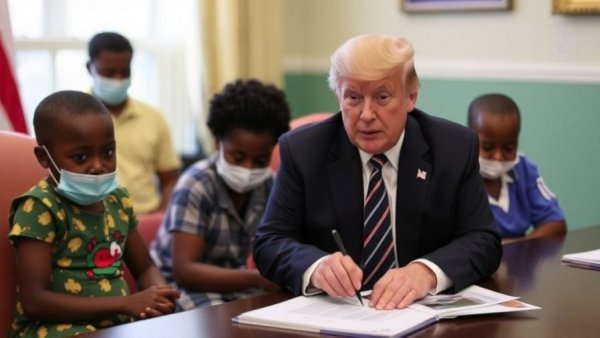
Redirecting Funds: A New Direction for U.S. Health Aid
The Trump administration's recent budget plans have raised a red flag regarding U.S. foreign aid for health and family planning, particularly for low-income countries. Instead of allocating roughly $605 million to international family planning aid as intended by Congress, the administration intends to divert these funds, creating considerable concern among nonprofit organizations and health advocates. The intention to redirect funds can disrupt decades of progress made in reproductive health services, putting the well-being of millions of women at risk.
Why This Matters: The Impact of Funding Cuts
For many countries heavily reliant on U.S. aid, these financial cuts mean less access to contraceptives and reproductive health services, which have been proven to reduce maternal mortality rates significantly. According to the Guttmacher Institute, U.S. investments in family planning have previously prevented approximately 34,000 maternal deaths, showcasing the crucial role of this aid in saving lives. Countries like South Africa, Tanzania, and Zimbabwe are set to face over $100 million in cuts, hindering existing health programs and threatening public health outcomes.
Concerns Raised: Voices from the Ground
Advocates from organizations like Partners In Health and Population Action International warn that the proposed changes defy the priorities set by Congress and threaten communities already grappling with healthcare inequities. Vincent Lin, a health policy expert at PIH, emphasizes the importance of these funds for essential public health programs, highlighting that the executive branch is, in essence, ignoring and violating Congressional decisions that were established to support family planning and health initiatives.
Looking Forward: The Future of Global Health Programs
The ongoing discussions around the proposed budget changes suggest a growing tension between the executive and legislative branches concerning foreign aid and health decisions. This situation echoes a broader issue in U.S. governance where health policies intersect with political agendas. If these shifts continue, we might see increased advocacy from nonprofits pushing for a sustainable healthcare aid model that prioritizes the needs of vulnerable populations over geopolitical interests.
What Can Families Do?
For families in the Dallas Fort Worth area and beyond, understanding these developments is crucial. While the political landscape may seem distant, it directly impacts the global community and ultimately, local health policies. Supporting nonprofits that advocate for reproductive health and family planning can amplify the voices of those affected by these decisions. Engaging in community discussions about health funding can foster a collective awareness of the importance of maintaining robust international health programs.
In conclusion, the decision to redirect vital health funding poses significant risks for low-income countries relying on U.S. support. By staying informed and active in discussions surrounding health funding, families can contribute to a more equitable global health landscape. It is vital for community members to advocate for policies that protect and promote the health rights of everyone around the globe.




Write A Comment